How a Premier League club with 100+ departments and 600+ staff structures OneDirectory into three org chart views, and what other clubs can take from the setup.
A Premier League football club is roughly twenty businesses sharing one badge.
A sporting organization, a media brand, an events business, a hospitality provider, a retailer, a community foundation, and an employer, all running at once. One Premier League club we work with runs more than 100 departments across just over 600 staff. That is a department for every six people, a ratio almost no conventional business reaches.
This page walks through how that club structures OneDirectory, and what other football clubs and elite sports teams can take from the setup.
Over 100 departments. Over 600 employees. One connected view.
A Premier League football club uses OneDirectory to make its complex football and business operations easier to understand.

Why Football Clubs Break Ordinary Org Chart Software
Most org chart software assumes one tree: a company, its divisions, its teams, each box reporting upward to the next.
A football club does not work like that. Behind the first team sit:
- First team coaching, performance, analysis, medical, kit, and equipment teams
- Academy operations, education, coaching, match support, transport, scouting, psychology, medical, and sports science teams
- Women's football, girls' pathways, and development programs
- Ticketing, retail, hospitality, sales, activations, marketing, content, digital media, and fan engagement teams
- Finance, legal, HR, IT, safeguarding, administration, reception, facilities, grounds, cleaning, security, and matchday safety teams
- Foundation, community, education, and outreach departments
Many of these teams work closely together without sitting in a simple reporting line. A medical team, performance team, academy team, and coaching team may all interact around players, fixtures, and development pathways. Matchday operations expand and contract around the fixture list. Commercial teams re-form around campaigns and partnerships.
Because in an organization this broad, “just ask someone” does not scale.
How the Club Structures It: Not One Chart, Three
The club’s answer was not a single company-wide chart. It is three purpose-built automated org chart views, each reflecting how one part of the club actually works.
1. Football Operations
The sporting side of the club: first team operations, coaching, medical, performance analysis, scouting, academy teams, player care, kit, equipment, and match support.
These teams are highly specialized and interact constantly without reporting to each other. A view built only around reporting lines would hide most of how this side of the club works, so the football operations view is organized around how the teams actually group.
2. Business Operations
The business behind the football: finance, legal, marketing, sales, hospitality, retail, ticketing, IT, people operations, facilities, security, and administration.
This side of the club looks much more like a conventional company, and its view reflects that: clearer hierarchies, conventional reporting lines, functional teams.
3. Departments
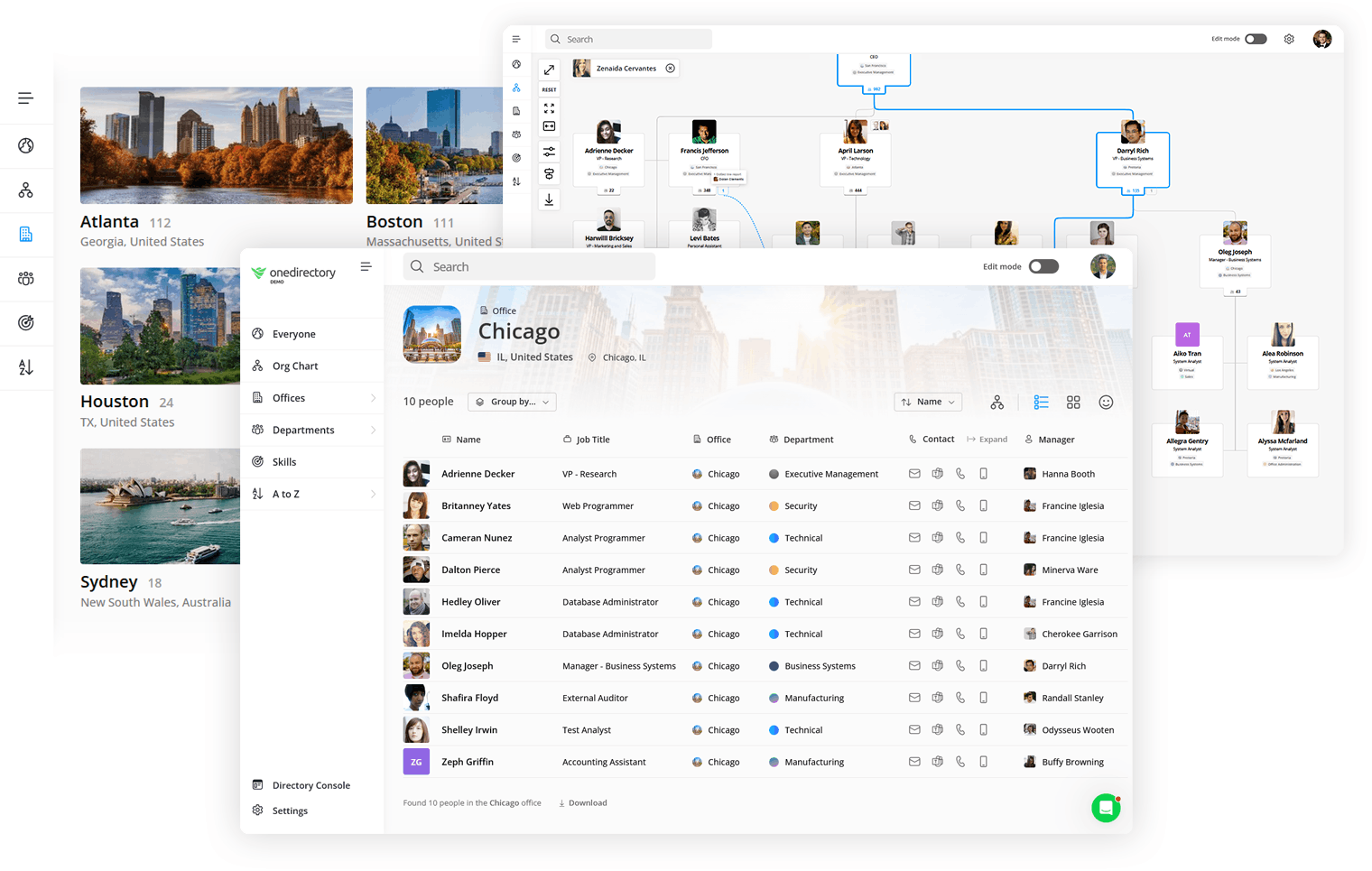
The full breadth of the club in one browsable view: over 100 departments spanning academy, first team, women’s football, matchday, community, commercial, and operational areas.
It helps a new starter understand the club faster.
It helps a commercial team find the right matchday contact.
It helps senior leaders see how functions are organized.
And it helps employees understand the wider club beyond their own department.
Splitting football and business operations matters because forcing them into one tree would imply reporting lines that do not exist. Separate views let each side reflect its real organizational structure while staying searchable as one club. And because every view syncs from the club’s Microsoft 365 tenant, none of them is a document anyone has to maintain.
What We Can and Cannot Show You
A limitation worth stating plainly: the club’s internal adoption and data-quality numbers are its own, and we do not publish customer-specific figures.
What we can share is what we measure across our whole customer base. Across the 65 organizations in our usage study, employees opened an org chart 39,854 times in 90 days, and one in three active employees used it at least once. Organizations with many specialist departments, like this one, sit at the heavier end of that usage.
For Other Clubs and Elite Sports Teams
The structure on this page is not specific to football. Any elite sports organization splits the same way: a sporting operation full of specialist teams that do not fit a tree, and a commercial operation that mostly does.
If your club runs on Microsoft 365, these views are built from the employee data you already have. Clubs and elite sports teams with a few hundred staff or more should start a OneDirectory trial and build these three views against their own tenant in an afternoon. Smaller clubs with a few dozen staff will get more from a well-kept staff list than from structural views they do not need yet.
Frequently Asked Questions
Do football clubs need org chart software?
Clubs under about a hundred staff can manage with a maintained staff list. Above that, specialist departments multiply faster than any manually maintained chart can track. The Premier League club in this example runs more than 100 departments for just over 600 staff, a department for every six people.
Can one org chart cover football and business operations?
Poorly. Football operations are built around specialist teams that interact without reporting to each other, while business operations follow conventional hierarchy. Forcing both into one tree implies reporting lines that do not exist. This club runs three separate views instead: football operations, business operations, and departments.
How do the org charts stay up to date?
They sync from the club’s Microsoft 365 employee data, so the charts update when the source data changes. Nobody maintains a chart document, and a reorganization shows up in the views without anyone redrawing anything.
Football operations, business operations, and departments have different structures and different rhythms. The club reflects each one honestly instead of forcing them into a single tree.