What Buyers Actually Want From Employee Directory and Org Chart Software in 2026
G2's Spring 2026 results tell a clear story: buyers want employee directory and org chart software that is easy to adopt, quick to launch, and built to deliver value fast. Here is what the data, and real customer feedback, actually shows.

Choosing employee directory and org chart software used to be fairly simple.
Could it show reporting lines? Could it pull in employee data? Could it help people understand who sits where in the business?
For a long time, that was enough.
It is not enough anymore.
Today, HR and IT teams are not looking for a static org chart or a basic employee directory. They are looking for software that helps people understand the organization faster, makes employee information easier to find, and improves visibility across the business, without creating more admin work.
That means buyers want more than something that looks good in a demo. They want employee directory and org chart software that is easy to adopt, quick to launch, and able to deliver value fast.
That shift is clearly reflected in G2's Spring 2026 results. The same themes keep coming up: usability, implementation speed, business value, and vendor experience.
For OneDirectory, those themes came through strongly.
OneDirectory's G2 Spring 2026 Recognition
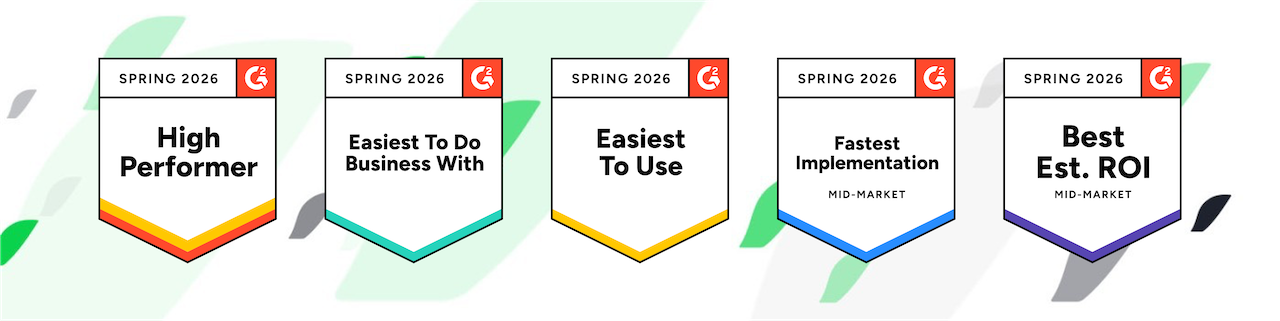
In Spring 2026, OneDirectory earned the following G2 badges:
- High Performer and High Performer — Mid-Market
- Best Estimated ROI — Mid-Market
- Easiest To Use and Easiest To Use — Mid-Market
- Easiest To Do Business With and Easiest To Do Business With — Mid-Market
- Fastest Implementation — Mid-Market
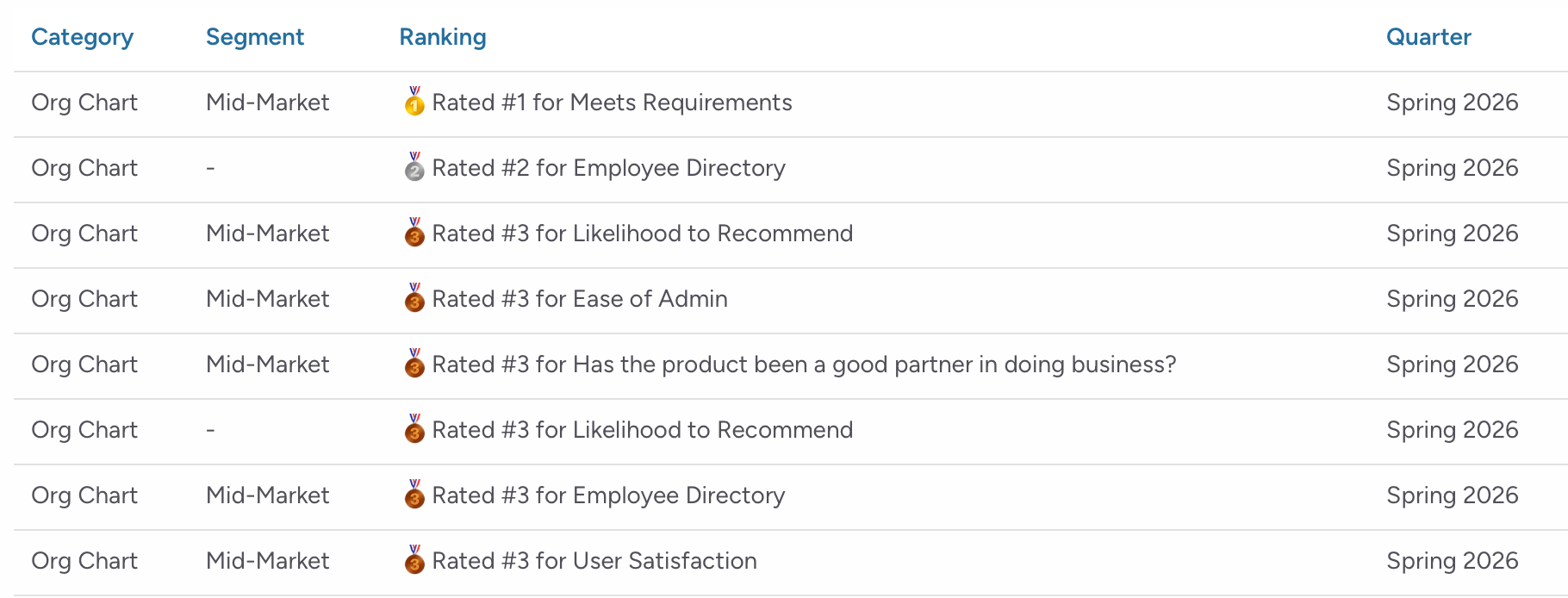
OneDirectory also achieved standout rankings:
- #1 for Meets Requirements — Mid-Market
- #2 for Employee Directory
- #3 for Likelihood to Recommend
- #3 for User Satisfaction — Mid-Market
- #3 for Ease of Admin — Mid-Market
These results point to what buyers now care about most when evaluating employee directory and org chart software.
“As the world’s largest software marketplace, G2 is proud to surface the products that rise to the top based on customer feedback and market presence,” said Godard Abel, co-founder and CEO, G2. “Congratulations to OneDirectory for achieving a position in this season’s reports—a recognition earned through customer love.”
What Real Customer Feedback Adds
Badges and rankings tell one part of the story. Customer reviews tell the other.
Two recent G2 reviews reinforce the same themes showing up in OneDirectory's Spring 2026 results: quick implementation, strong day-to-day usability, and a live org chart that makes the business easier to understand.
One verified mid-market user in banking said:
“We chose OneDirectory because it was quick and easy to implement. The team really enjoy all the features and use it almost every day.”
That is a strong signal for any buyer. It speaks to both implementation speed and real day-to-day adoption, not just a clean go-live.
Another verified mid-market user in manufacturing said:
“OneDirectory is a really solid employee directory. The employee profiles are great, and the live org chart makes it easy to see the structure of the entire company. The tool was really quick and easy to implement.”
That is exactly what buyers are looking for. Not software that scores well on paper, but software that helps employees find the right people, understand the business, and start seeing value quickly.
1. Buyers Want Software That Feels Easy From Day One
Ease of use can sound like a soft benefit until you are the team responsible for rollout and adoption.
Then it becomes one of the most important factors in the buying decision.
If employee directory and org chart software is difficult to understand, difficult to manage, or difficult to roll out, teams feel that pain quickly. HR ends up answering more questions. IT carries an unnecessary admin burden. Employees lose trust in the platform because the experience feels clunky or confusing.
The best employee directory software should make it easy for employees to find people, understand reporting structures, and navigate the organization without a learning curve. It should also make life easier for the people maintaining it behind the scenes.
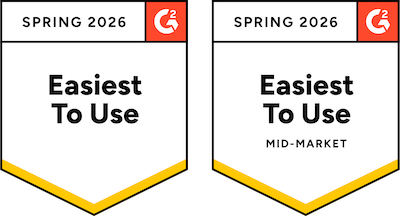
That is one reason OneDirectory's Spring 2026 recognition stands out. Being named Easiest To Use, along with strong usability placements, reflects something simple but important: adoption gets much easier when the product feels intuitive from the start.
For modern businesses, ease of use is not a nice-to-have. It is one of the clearest indicators of whether a platform will actually succeed after purchase.
2. Buyers Want Fast Implementation, Not Long Projects
Software does not create value while it is stuck in rollout.
It creates value when it is live, trusted, and being used.
That is why implementation speed has become such a key part of software evaluation. Teams want solutions that can be launched without heavy lift, long delays, or drawn-out onboarding.
This is especially true for employee directory and org chart software. When an organization decides it needs better visibility into its people structure, reporting lines, or employee directory, it usually wants that clarity now. It does not want to wait months before people can benefit.
OneDirectory's Fastest Implementation — Mid-Market recognition speaks directly to that reality. The faster software goes live, the faster teams start seeing value.
As one G2 reviewer put it:
“We chose OneDirectory because it was quick and easy to implement. The team really enjoy all the features and use it almost every day.”
That kind of feedback matters because it connects speed with actual usage, not just project completion.
3. Buyers Want Proof That the Software Will Deliver Real Value
Every software company talks about value. Buyers want proof.
The challenge with employee directory and org chart software is that value does not always show up in one obvious metric. Often it appears in the form of better organisational visibility, less time spent answering employee questions, easier access to up-to-date people information, and simpler navigation across the business.
Those benefits matter. They also build on each other over time.
That is why recognition like Best Estimated ROI — Mid-Market stands out. It suggests customers are seeing meaningful value from the platform, not just using it because they have to.
For buyers, that is an important distinction. The question is no longer, “Can this software create an org chart or employee directory?”
The question is: “Will this software make our organisation easier to understand and easier to manage in a way that justifies the investment?”
That is the standard buyers are increasingly using. And that is exactly why customer reviews carry so much weight.
4. Buyers Want a Vendor That is Easy to Work With
The product is only part of the experience. The vendor matters too.
Buyers pay close attention to what it feels like to evaluate, buy, implement, and work with a software provider. Even a strong product can create friction if the company behind it is difficult to deal with.
That is why customer-driven recognition around vendor experience is so valuable.
In Spring 2026, OneDirectory earned Easiest To Do Business With recognition both overall and in Mid-Market. The broader results also showed strong sentiment across Meets Requirements, Likelihood to Recommend, User Satisfaction, and Ease of Administration.
The right software vendor should reduce friction, not add to it.
When the buying and rollout experience feels straightforward, teams move faster, confidence grows, and the software has a better chance of succeeding long term.

What This Means for Buyers in 2026
If there is one clear takeaway from the latest customer feedback, it is this:
Buyers are no longer impressed by feature lists alone.
They want software that is easy to adopt, quick to launch, easy to manage, and capable of delivering real value.
That applies directly to employee directory and org chart software. The strongest platforms in the category are the ones that reduce friction instead of creating it. They help employees find the right people faster. They make reporting structures easier to understand. They reduce manual effort for HR and IT. They help organizations stay connected as they grow and change.
That is the lens buyers should use today. Not just what the platform can do in theory, but how quickly it can deliver value in practice.
Final Thought
The latest G2 results reinforce a broader truth about the category.
The future of employee directory software is not just about visualization.
It's about clarity, connection, speed, and data you can trust.
And for buyers trying to make the right decision, those are the signals that matter most.